
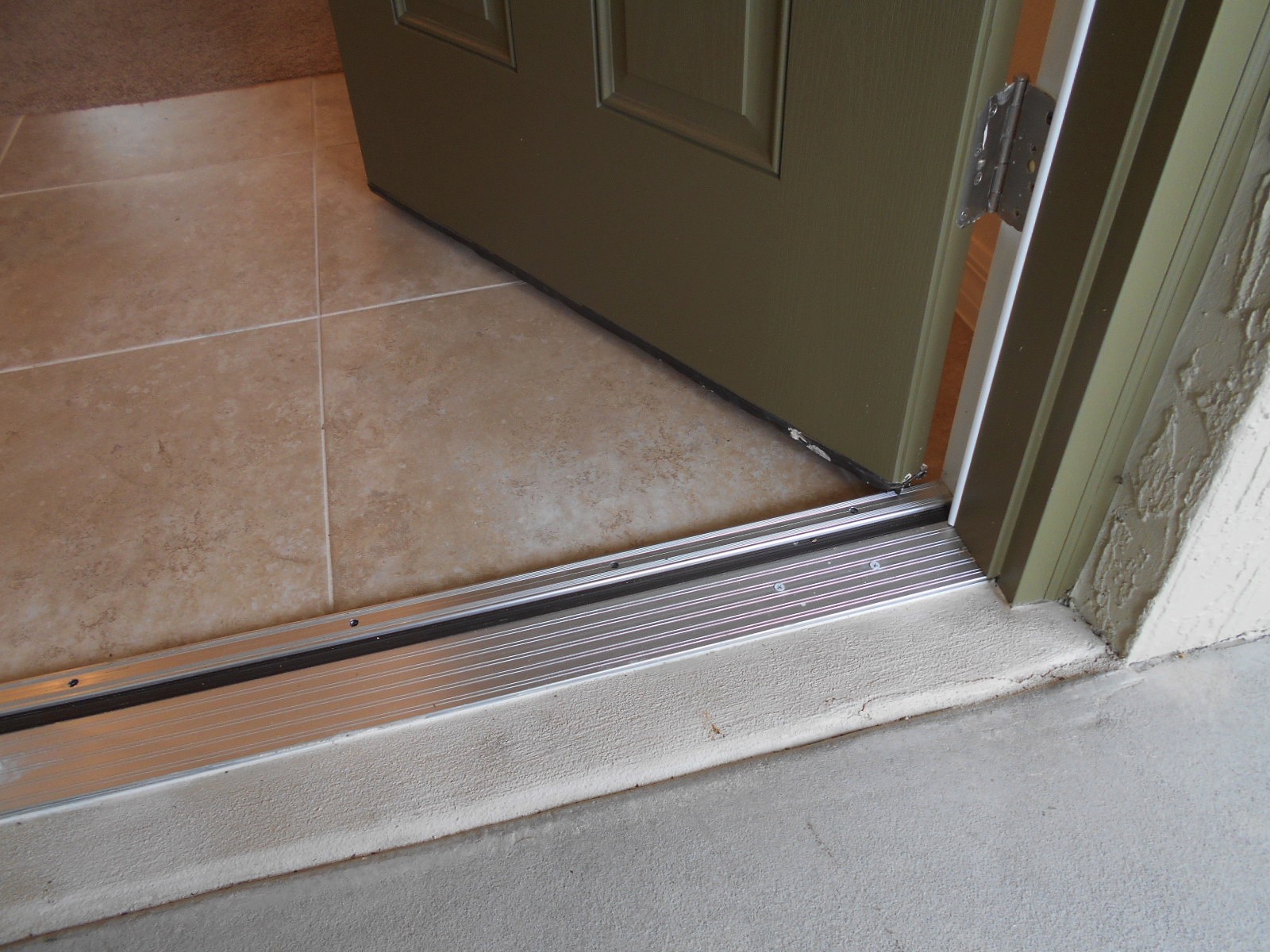
In most homes, you will have to step up to enter. If you are on a raised foundation, you will typically step up approximately 5 inches; if you are on a slab foundation, you will usually step up at least 2 inches from the outside.
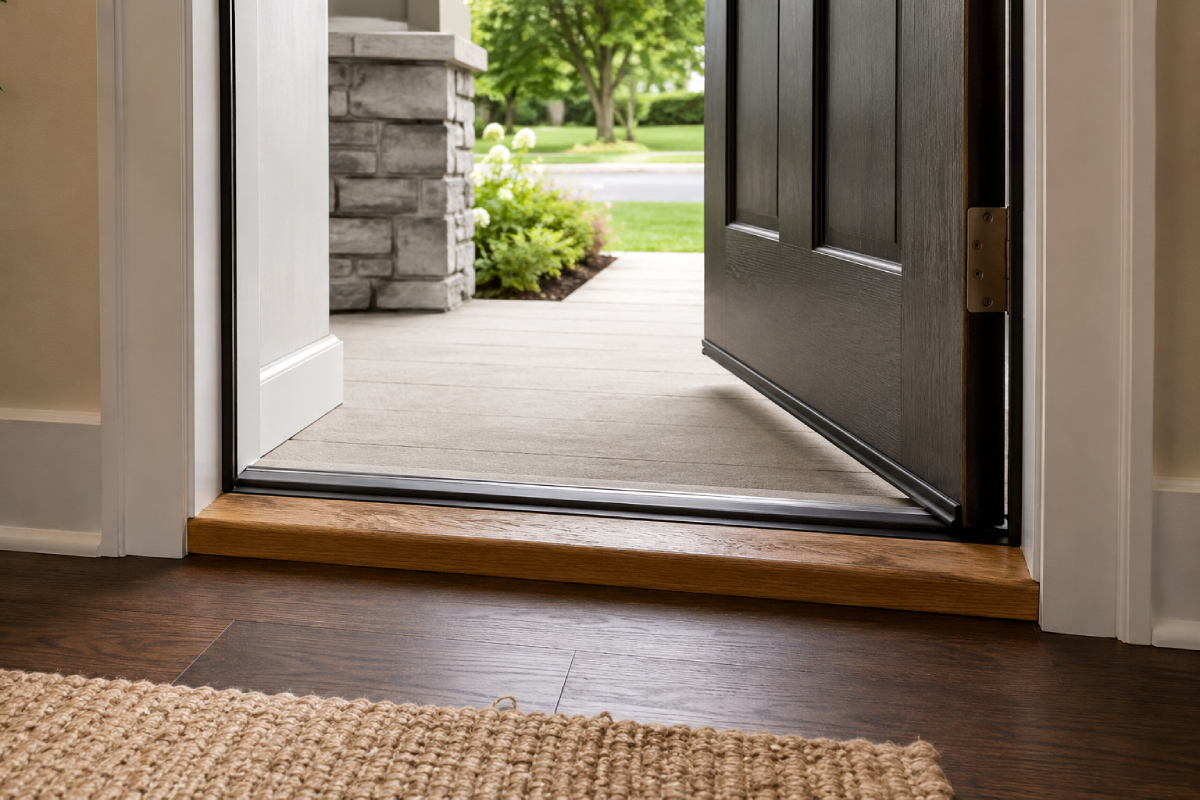
However, some homes will have the outside and the inside nearly level with one another. These are usually specially designed with a large overhead so that water cannot come directly near the openings. These are unique and create different issues than a tripping hazard. This situation requires that the tracks be recessed and cleaned out regularly so that debris does not build up.
But typically, from the inside, a finished floor will be up to a doorway’s threshold or sill.
What is the threshold?
A threshold is the bottom portion of an entry door that is on the outside. Thresholds on newer door units come standard, already attached. The threshold will be approximately 1-5/8” high. The flooring will usually be approximately 3/4 of an inch thick, reducing the total height of the threshold by the thickness of the floor. However, on some floors, the threshold goes over the top, which will leave the total size of the threshold. The concern here is stepping over the threshold from the inside, causing a tripping hazard. I will go over a couple of options and facts about thresholds and why they are important.
A threshold is very important because it raises the door above the finished flooring, allowing it to open and close without impediments such as rubbing on carpet or tile. Thresholds also act as a barrier to outside weather, allowing rain to be diverted back outside. On sliding patio doors, the bottom portion has a built-in track where the door glides. There are weep holes that will catch any rainwater and divert it back outside.
Handicap Accessible Thresholds:
Some openings may be required to be handicap-accessible. This means the opening must be at least 32” wide, and the threshold may be only 1/4” above the finished flooring, both inside and outside. Some door manufacturers offer handicap-accessible thresholds, but you must be extremely careful when ordering one. These thresholds have a much lower profile. The flooring inside cannot have any high points that would interfere with your door’s swing. You will most certainly not be able to put any type of rug in front of your door on the inside.
These low-profile, specially made thresholds do not keep much of the outside rain out because of their design. If you are going to make the opening wheelchair-accessible, you will most likely have to raise the outside portion to bring it level with the inside portion.
Another way is to have your door swing out instead of in. This will allow the transition of your door to be clear, and you can keep a really low profile.
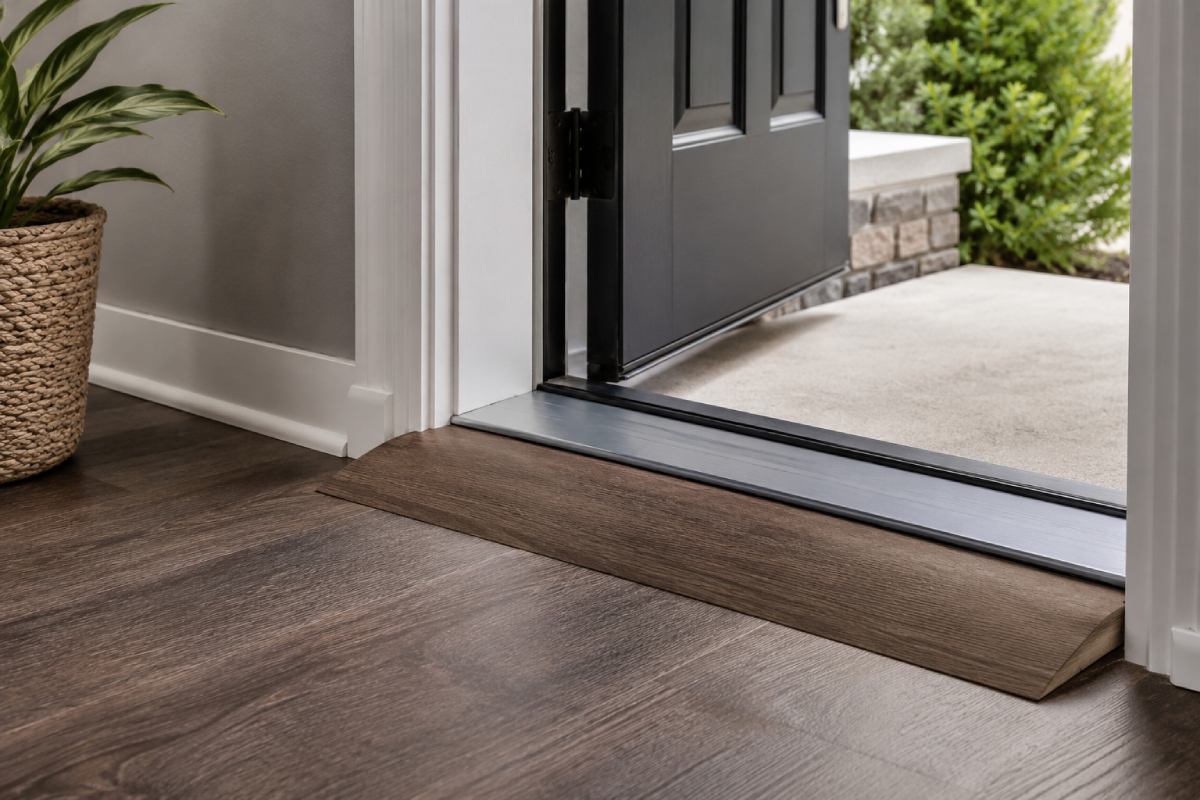
You can also build up the floor near your entryway or use a floor transition profile up against the threshold that is beveled so that someone’s foot does not get stuck where the threshold meets the floor.
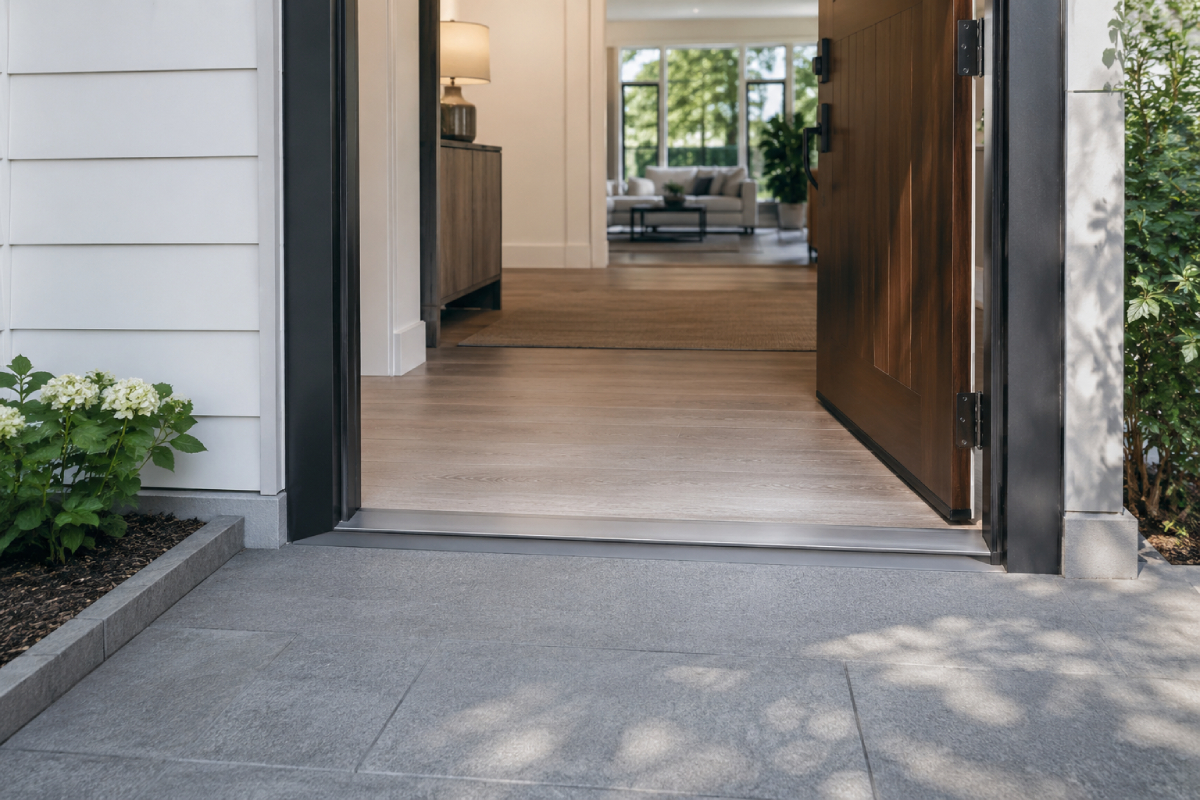
Regarding options, many manufacturers do not even offer more than a few colors. The inside is usually a different color from the outside, and some people do not like this. The outer portion is metal that’s either bronze, gold, nickel, or just a Mill Silver finish. The inside is usually made of an adjustable composite and is usually Tan.
Just an added note regarding thresholds. They will typically have some flexibility because they will pass an outside concrete slab by approximately 1 to 2 inches.
This is typical. If this concerns you, you can sometimes build up the bottom of the threshold, but this is not something usually included in a door installation. I would hesitate to do this because it will not look aesthetically pleasing once it’s finished on most homes.
For more information, please call 800-868-6130. Top of the Trades Home Remodels today, and we will help you make a selection.